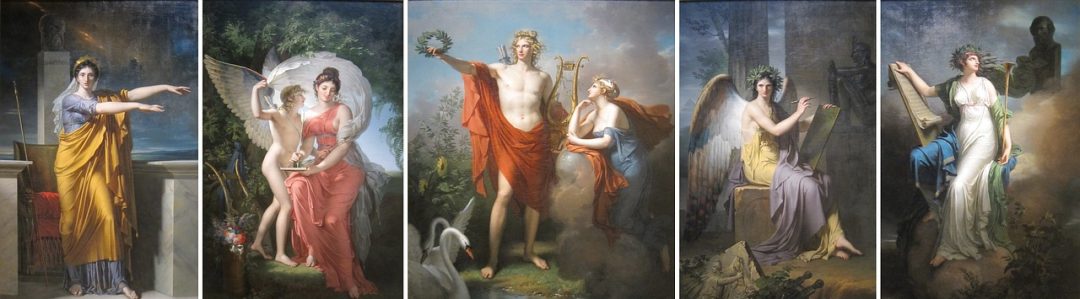
This post is the first of a series on museums from their origins and objects to architecture, founders, and the future function of such places. Art museums can be a wonderful place and while visiting one you might not necessarily think about how they came to be. My mission here at love of muse is to bridge the gap between the visitor and the art museum itself. I want to put a spotlight on public history which is the study and places where one can learn information from a variety of sources like museums and libraries. Public history nowadays encompasses a part of education called Museum studies.
While it is a bit cliché starting with the definition of what a museum is would be helpful and then I’ll move into how art in antiquity was viewed in a public space to a private space in churches during the Middle Ages and back to art being available to the public again. According to Merriam-Webster.com the following is the definition for a museum: an institution devoted to the procurement, care, study, and display of objects of lasting interest or value.
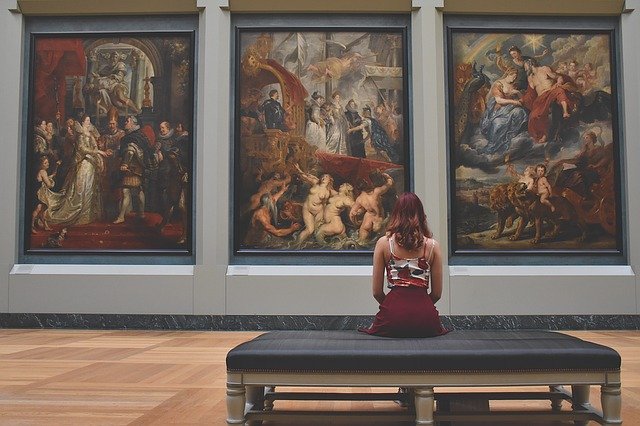
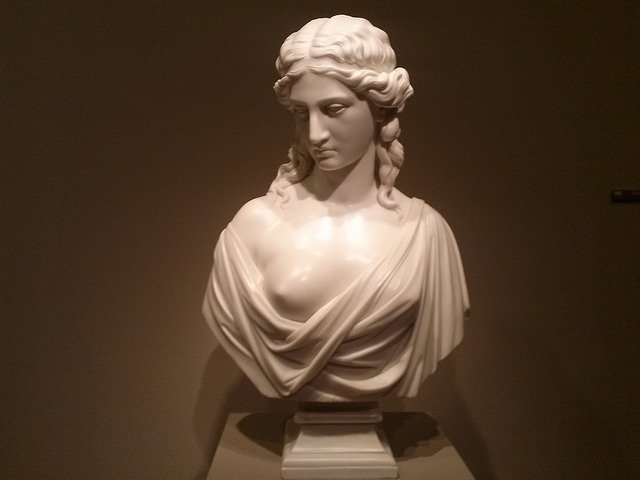
I chose the name love of muse because it encompasses creative inspiration and museums. But what exactly is a muse? Briefly a muse is a personification from ancient Greece regarding human creativity, such as music and plays or topics that merit being written down like history. In art they are depicted as female and there are nine of them. In antiquity in public spaces we find the classical forms of art such as sculptures and mosaics. This kind of art lets us see what was important to the people of history and what they valued. Ancient Romans had statues of emperors both in public and in private homes to be worshiped as gods by the citizens. The homes of the Romans had a portrait bust of the male family members of the household much today like you would have the portrait of your head of the house. In the sense of these individuals are worth being remembered and held order and stability of the home. While out in public forms Roman art such as tiled mosaics on the floors of marketplaces to show potential buyers what the business sold such as wine, fish, or grain. There were mystery schools of different religious sects that depicted art for the purpose of initiation rituals and this clash of religious beliefs was depicted in the movie Agora.
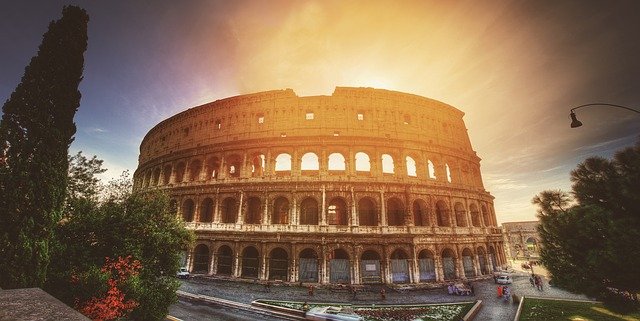
Many today like we would visit a public square for shopping, visiting a park and socializing this was the function of the ancient Greek Agora. An Agora is a public meeting place like a market with art and goods to be sold it functioned as the heart of ancient Greece. (As a small aside, there is a wonderful movie called Agora, it has Rachel Wes stars in it as she plays the female Hypatia the film explains her life in education, her scientific discoveries, contributions to math, science, and her murder by a mob of zealots. I will write a post about her that will be part of a different series.) The art that would have been viewed in public squares in Rome was a testament to their plunder of other cultures and the military triumphs. The ancient Romans even had a piece of architecture called a triumphal arch it would show depictions of soldiers returning from battle with the spoils of conquered people who then became slaves themselves and lost all their valuables to the Romans. While Rome’s public spectacles were manufactured through the power and wealth of the emperor in places like the Coliseum, the fall of Rome would change how art was displayed and would signal a shift in what kind of artistic subjects were important.
There was a transition happening at the end of Rome’s history with Rome like ancient Greece there was always a hotbed of religious cultures, individuals, and customs vying for supremacy. The movie Agora is a good reflection of this as it shows the clashes between Paganism’s Greco-Roman culture, vs. Judaism, and Christianity.
The Roman Emperor Constantine simply legalized Christianity, he did not create it. It is believed that his reasons for legalizing Christianity were for political gains to unite the Empire. During this time Constantine was putting money into Christian art projects in the form of buildings and public art. This was a signal that the religious landscape was changing and overtime Christian art would reflect the will of those that were in power. In 476ce the fall of Rome came about due to many reasons as its long held vast territories through military might were stretched thin.
Christianity much like the religions of the past when they sought to convert people it is not peaceful. Countless numbers of people were murdered for refusing to convert to a new faith be it Islam or Christianity, the Pagan Romans killing Christians. The Crusades later on would be a reflection of this but against even their own people-fellow Christians. Due to these changes it is a mixed bag of what was destroyed and preserved within Christianity. How the new religion shapes our view of the past is seen in art and writing. While some of the writings done by monks preserved things in Ireland for example most, if not all of what we know about the ancient past from cultures like Greece and Rome were preserved by the Muslims. The men in charge of Christianity focused on controlling the flow of information and ideas even in art.
The public art that existed during the middle Ages was a reflection of the Christian culture through its churches interior and exterior. Art was used as a vehicle of communication to the public because since the fall of Rome who became educated was very selective. Art during this time was created by guild’s that were groups of skilled artisans who craft particular items and how their knowledge handed down through an apprenticeship. This is the closest the general public came to an education. Typically only members in the church could read and write. Any form of text that needed to be copied down had to be hand written. The art within churches and cathedrals throughout this time served to be a visual collection of stories from the Bible. The general public exposure to art would’ve been limited to what the church had. Art had moved from a very public and open space under pagan cultures to a closely guarded and select environment under the rule of the church. Knowledge of pagan cultures and ideas would not come about until the Renaissance.

As various groups of Christianity expanded into Catholicism, Protestantism, and the like, each with their own message of how they interpreted the Bible. Today we know an icon as a famous person for something like how Selena has become an icon of her music and all that she represents to people around the world. This is not the traditional understanding of an icon that originally was meant within the church as a particular type of art. Within the world of art history and an icon is typically defined as an object of religious devotion in particular small portable paintings. Much the way you would carry a photograph of your loved one in your pocket today and icon was that in the religious sense. A small painting that you could take with you when you traveled to be closer to your faith. Some were protected by wooden shutters. They were different feelings and interpretations of icons in their use based on where the church split and divided power among the old ancient Roman territory.
One way that Islam is different from Christianity is in the art and is known for geometric forms and shapes, depicting nature like flowers and birds. Islam is forbidden from depicting the important religious individuals like prophets. They are not allowed to depict God because it would be seen as inappropriate to depict something is complex is God in visual form. As trade routes expand and people exchange goods and ideas Islam’s view on depicting God crept into Christianity. This was a period of history known under the term Iconoclast or the destroying of icons. Britannica has a good article on this subject.
This lead to a gutting of the beautiful religious art held within churches. It became so serious that the penalty for protecting and painting these objects of devotion was death. There was, however a huge backlash over time as people found connecting to the icon important and moving. There was a reversal of the destruction of these images and they were once again allowed to continue to be produced and honored. While they were not the object of individual worship, they were typically seen as a way to transfer the prayers and thoughts of the worshiper to the divine. These icons could also embody positive qualities that the owner would like to bring out in themselves. Having a form of art like this in the private home would lead to a cabinet of curiosities later on in history.
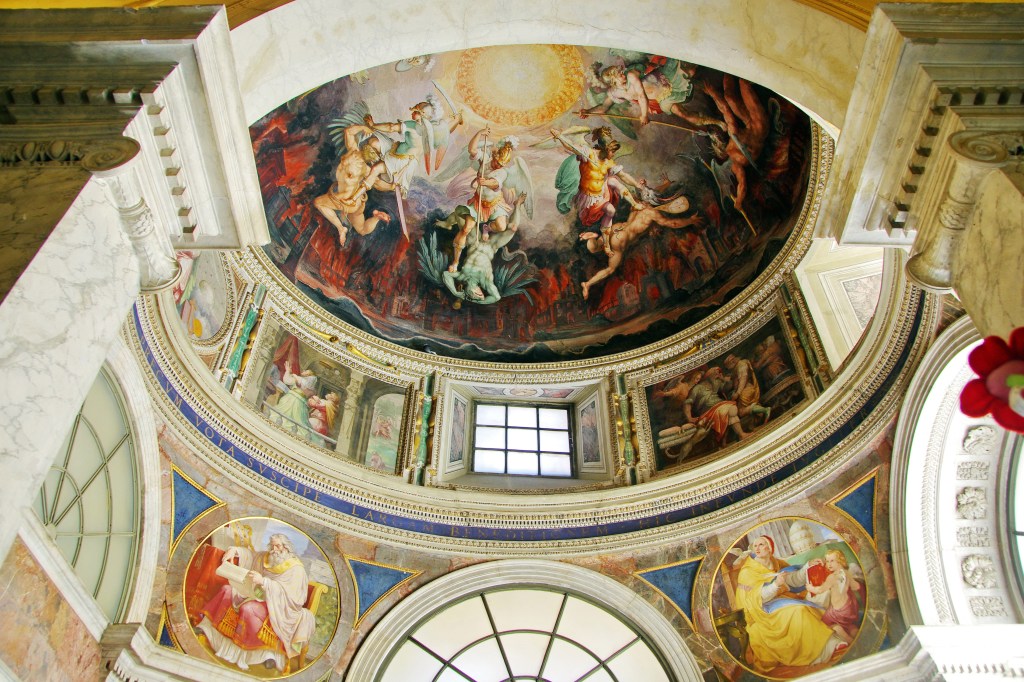
The Renaissance was the rediscovery in connection to ancient ideas from the pagan past of Greco-Roman cultures. Artistic and building techniques that had been lost during the Middle Ages were rediscovered during this time. Artists were getting a grip on understanding how to use perspective in art. An example of the merging of public and private art is reflected in the partnership of the famous Renaissance painter Raphael and his powerful boss Pope Leo the 10th. A research paper I did for history class encapsulated the following: a relationship between Raphael, who was given papal documents to visit a powerful family in Rome to explore and study their collection of ancient statues. This was so Raphael could learn from them and take his sketches to make improvements on church art internally. This showed a connection between the past antiquity and the rediscovery of pagan philosophies expressed visually in the church. During this time the artist would be paid by the church and most had no choice in what they depicted. The Renaissance was a time of artist becoming better known as individuals like Michelangelo, whereas in the past they were traditional known as craftspeople or in Medieval guilds.
The Enlightenment coming out of the Renaissance which set the stage for the cabinet of curiosities. They were wooden storage case housing objects of the natural world such as shells, butterflies, and objects from antiquity or anything else that caught their fancy. During Europe around this time in the 17th and 18th century wealthy individuals would participate in was called a grand tour. They would travel around Europe and collect art for there large houses, be it paintings, sculptures, or something else. This personal collection for one’s house and was shown off to friends also it depicted wealth and good taste in the owner of such a collection. The way art was hung in these places was nothing like a museum. Paintings were put where things would fit in terms of size and space. There was no label next to the artwork explaining what it was. Modern-day museums correct this problem and always have a label next to the artworks so you can understand the context and subject. But how did things go from a collection of church art and wealthy home art to the general public?
A wonderful article at the University of California goes into the origins of this particular topic. It is written by Andrea Estrada at UC in Santa Barbara. The information in this article is from 2014 showing that our understanding of museums is still constantly evolving. “In 1734, almost 60 years before the Louvre made its debut in Paris, the Museo Capitolino (Capitoline Museum) opened in Rome. Established under Pope Clement XII, it was the first public art museum of international importance and served as the model for such institutions as we know them today.”
Let’s now look at an event in history that is far-reaching. This is one of many parts in the story of the Holocaust. As the topic can be written about from many angles and perspectives. The Nazis removed private art for public display this is still an insightful example to break the line between private and public art. The art within the private homes of individuals during the years leading up to World War II would be objects of plunder. The history of the Holocaust covers the atrocities done to countless people. It is starting to become knowledge now through the work of individuals like the monuments men that art and culture were caught up in the events of World War II. The monuments men are fascinating to me and I will cover them in depth in their own post. An important word in the world of art is called repatriation. This means covering the debate in art that has been taken from another culture or person and to whom and how it should be returned and displayed.
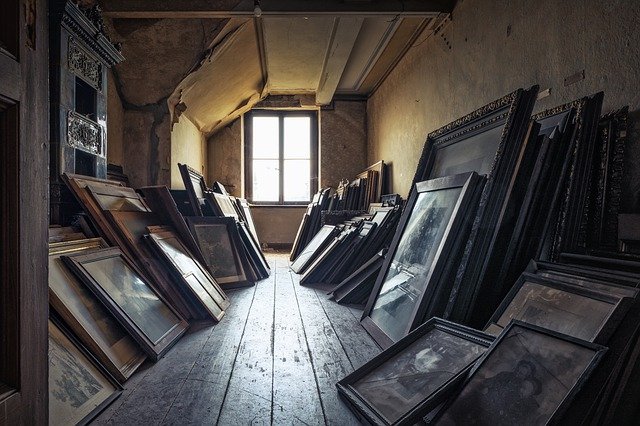
Adolf Hitler had an interest in art and wanted to start his own museum. The art was stolen by the Nazis in the thousands from families all over Europe. There is a wonderful documentary called the Rape of Europa. This goes into detail of the events from Hitler’s planning of the museum, to the art being stolen and stored in caves. Someone to so far as to even take the art and put it in their homes as an example of one of these individuals was Herman Goering. The logistics of this art theft were vast encompassing train loads full of artwork, and stolen objects from individuals. A group of American specialists that were called in to protect the art, historic monuments, and places in Europe in the midst of the war were not military men. These individuals were art historians, curators, among others who each had a role to play. While a movie was made of the monuments men, unlike what was depicted on the silver screen they were not in constant contact with each other and often worked in isolation. Having to completely figure situations from the ground up to what they were going to do moment to moment while also staying alive.
It is important to note that the wrongs of the past in terms of Nazi art theft are attempting to be painstakingly repaired. There are databases of stolen art that are yet to be found in logs along with the works that have been returned to family members if possible. Otherwise the works have been returned to museums. There is also a debate now on should museums repatriate work to family members once they come forward and realize that a particular work of art belong to a blood relative of theirs this still goes on to this day.
Modern-day museums are for everyone and that is traditionally reflected in the free day that most museums have. Most museums have a day where the general admission fee is waived allowing visitors to look at the permanent collection for free with exceptions like special exhibitions. See the post on that here. Modern-day museums are varied and unique depending on what they show to the public. An encyclopedic type of museum like the Metropolitan for example, is going to house a little bit of everything. While in contrast to this a highly specialized museum like in Amsterdam shows nothing but art by Vincent van Gogh. An encyclopedic museum is a wonderful way to get a feel for what art museums have to be seen and then based on what you like you can plan future visits from there.
In conclusion, the history of museums, shows us that the evolution of public spaces and private come together to create more than just a place to reflect on history. Such institutions preserve and educate the public on the history of human kind. They chart the creative spirit of our species and enrich our minds and values. The preservation of such places can benefit all people if you are a member or visit on a free day, there is a place for everyone at museums. So check out what is in your local area and be a sightseer in your own home town.
References and Sources:
Teeple, J. B. (2002). Timelines of world history. Dk Pub.
Origins of the public art Museum. (2014, November 5). University of California. https://www.universityofcalifornia.edu/news/origins-public-art-museum
Iconoclastic controversy. (n.d.). Encyclopedia Britannica. https://www.britannica.com/event/Iconoclastic-Controversy
Definition of Museum. (n.d.). Dictionary by Merriam-Webster: America’s most-trusted online dictionary. https://www.merriam-webster.com/dictionary/museum
 Love of Muses